Giving back to the community
I film and edit Berlin community events without charging organizers. Watch the recordings and help fund the next one with €5 per month.
- Published
- Updated
- Reading time
- 6 min read
I film and edit selected community events without charging the organizers. Each event usually takes a day behind the cameras and another day at the editing desk. The finished talks remain available to people who could not be in the room.
I pay for the equipment and reserve the editing time myself. If you want these recordings to continue, please contribute €5 per month on Patreon. Regular support is more useful than a one-off tip because I can see a predictable budget before agreeing to the next event.
Three communities I contribute to
These are the main community channels I manage. They cover different parts of Berlin’s technical community, and together they show the range of recordings I produce.
- Berlin.rb is a new home for Berlin’s Ruby community. Start with Carmine Paolino’s 40-minute talk, RubyLLM 2.0: Beyond Agents, from the first meetup.
- Elixir Berlin has a growing archive of complete talks and shorter community reports. Carlo Schmidt’s Taming 20 Million Oban Jobs in Production is a practical account of operating a large background-job system.
- Data Berlin publishes talks about data systems and production AI. Fabian Marino and Felix Pitterling explain an evaluation suite covering 45 business cases in Building Reliable Data Agents. Theo Mahmut Bulut presents a Rust HTAP database with copy-on-write branches in Stop Moving Your Data.
Browse those channels rather than judging the work from a showreel. The full recordings show whether the sound remains clear, the slides stay readable, and the speaker holds attention without an impatient edit.
Why I am doing this
I presented the idea at Elixir Berlin in a short talk called “Recording the Berlin Tech Community.” It is the compact version of this article, delivered in the same room where I record other speakers.
What I received
I taught myself programming, but I did not learn how to work with other people alone. User groups gave me a place to bring unfinished ideas, hear how experienced people approached the same problems, and discover that failure was worth discussing.
At a small software company, experienced developers built an early startup with me through pair programming. Immediate feedback replaced slow trial and error. Later, speaking at companies, user groups, and conferences taught me to explain an idea clearly and let other people question it. My talk archive grew out of that exchange.
The important part was not a list of appearances. Programming stopped being a solitary interest and became a shared practice.
Giving back with a different skill
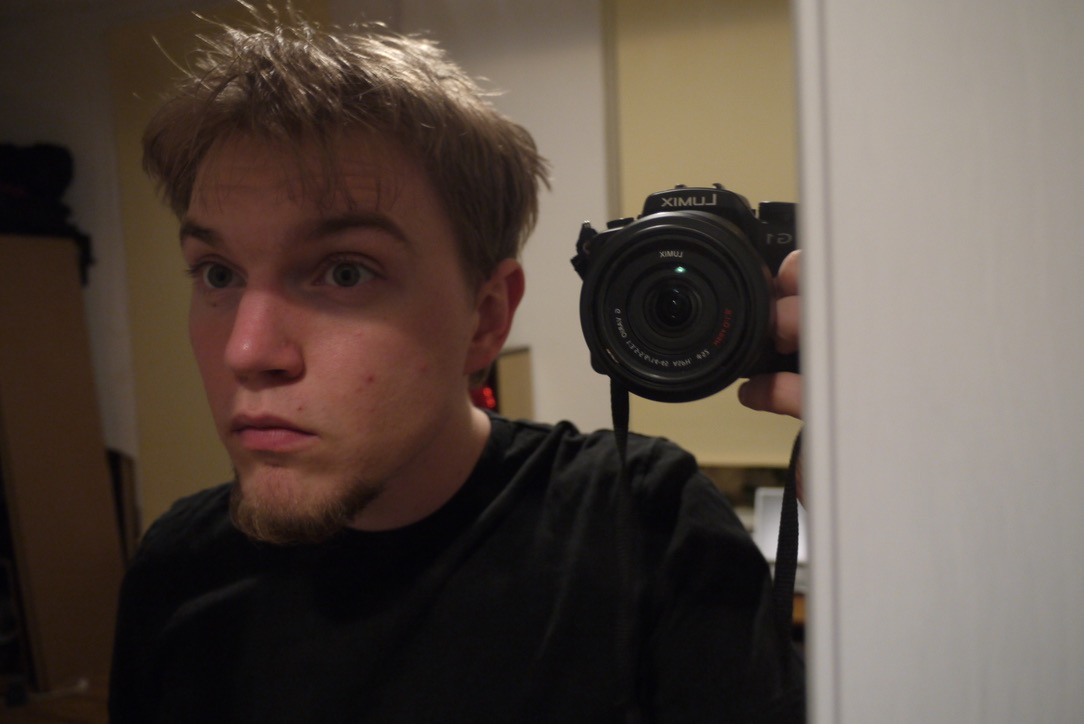
I bought my first mirrorless camera in 2010, took the inevitable mirror selfie, and then let the interest lie dormant for years.
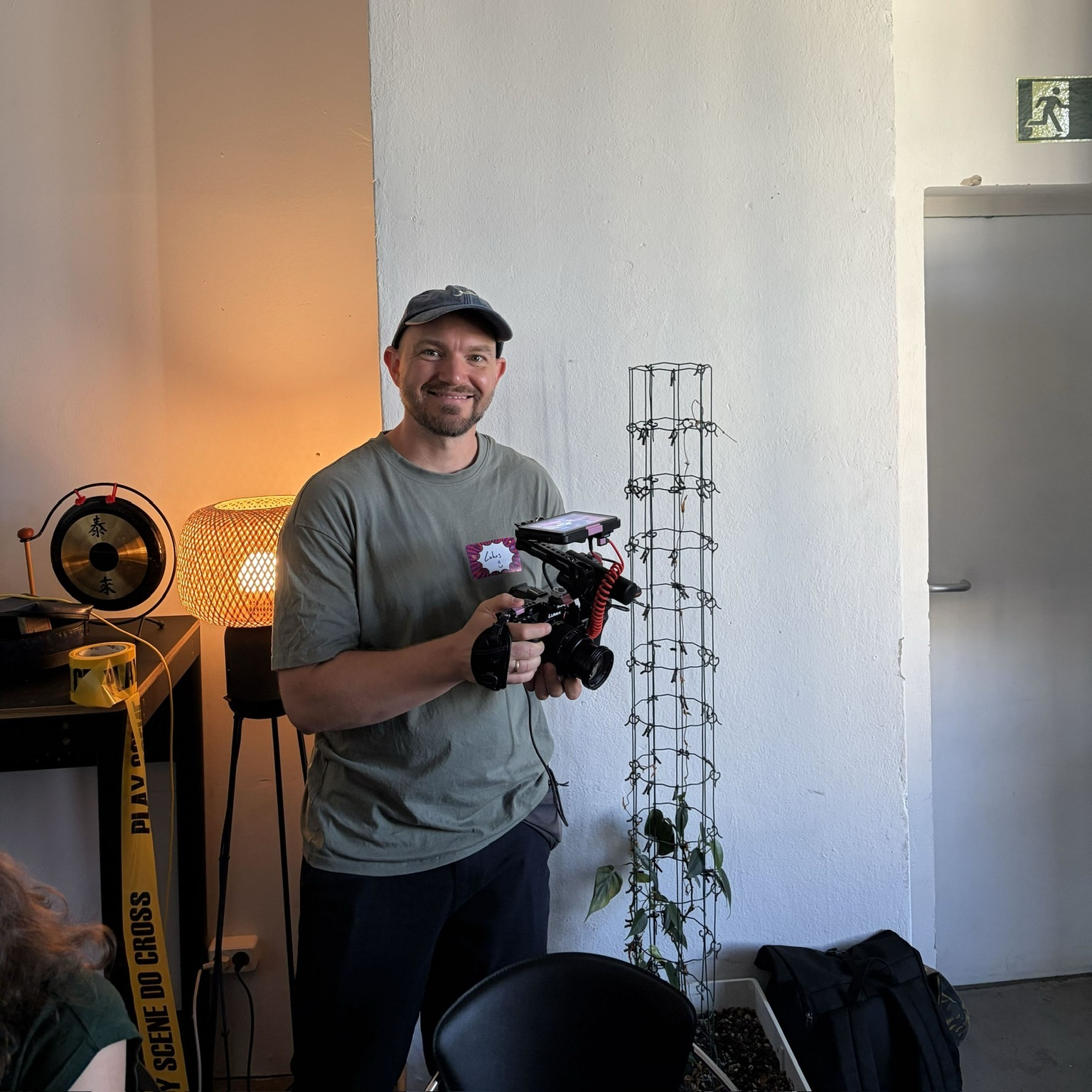
I returned to cameras in 2025 because I wanted a permanent record of my talks. A user group let me record an event, and I enjoyed the work enough to continue after my own talk had ended.
The first challenge was making reliable video in rooms that were never designed as studios. Lighting is uneven, sound systems vary, and an audience should not wait while I construct a film set. I gradually built a portable camera, lighting, and live-mixing setup that lets me adapt without making the production the center of the event.
Editing posed a different problem. A full talk needs clear sound and an unobtrusive cut. A recap needs to reduce hours of unscripted activity into a few minutes without misrepresenting the day. Learning when to preserve the complete record and when to compress it is now one of the parts I enjoy most.
That distinction guides my recent work: complete meetup talks for the Ruby, Elixir, and data communities, a recorded and streamed user-group evening, and a full Open Space reduced to a three-minute recap.
What a lasting record changes
Most community events are temporary. The people in the room benefit, then the room empties and much of the work disappears with it. A thoughtful record lets an idea travel, helps someone decide whether to attend next time, and gives a community a memory of its own development.
That is useful beyond programming and beyond Berlin. Any group built through voluntary effort faces the same question: how can a member contribute without taking on every part of organizing? Giving back does not have to resemble what you received. The useful contribution may be the skill you enjoy practising now.
What I am offering
Depending on the event, I can produce:
- A two-to-three-minute recap that preserves the atmosphere.
- Complete talk recordings for people who could not attend.
- Short interviews with members of the community.
- A live stream when the venue and format support one.
I have bounded the contribution so it remains sustainable and enjoyable: one event day and one editing day. I ask what matters, then handle filming and editing as autonomously as possible. I am based in Berlin and happy to consider invitations elsewhere.
This is not another agency service. It is a hobby I take seriously and genuinely enjoy. I want to offer it to communities that would otherwise finish a valuable event with no lasting record.
Make the next recording possible
I do not charge organizers for the event day or the editing day. That keeps the offer useful to volunteer-run groups, but it means the work competes directly with paid time and carries its own equipment, travel, and storage costs.
Please become a €5 monthly supporter on Patreon. A fixed monthly contribution gives me a dependable budget for this work and makes it easier to reserve another free editing day. It is support for the recording programme, not a booking fee, and it does not buy influence over which events I choose.
If the talks above taught you something, €5 per month is a direct way to help me record the next speaker and keep the result freely available.